
.svg)
Porcelain Pavers 101: An Explanation of Durability, Installation, and Maintenance
What are porcelain pavers, and why have they become the go-to hardscaping material for homeowners who want surfaces that actually survive Midwest winters? These engineered tiles represent a genuine leap in outdoor flooring - denser than concrete, more weather-resistant than natural stone, and virtually maintenance-free once installed.
As an NTCA-certified North Shore remodeling company that imports porcelain directly from leading Polish manufacturers, Majestic Tiles has installed porcelain pavers across hundreds of Chicagoland properties. This guide covers everything you need to evaluate: composition, performance in freeze-thaw climates, installation methods, realistic costs, and how to choose the right product for your project.
What Are Porcelain Pavers Made Of?
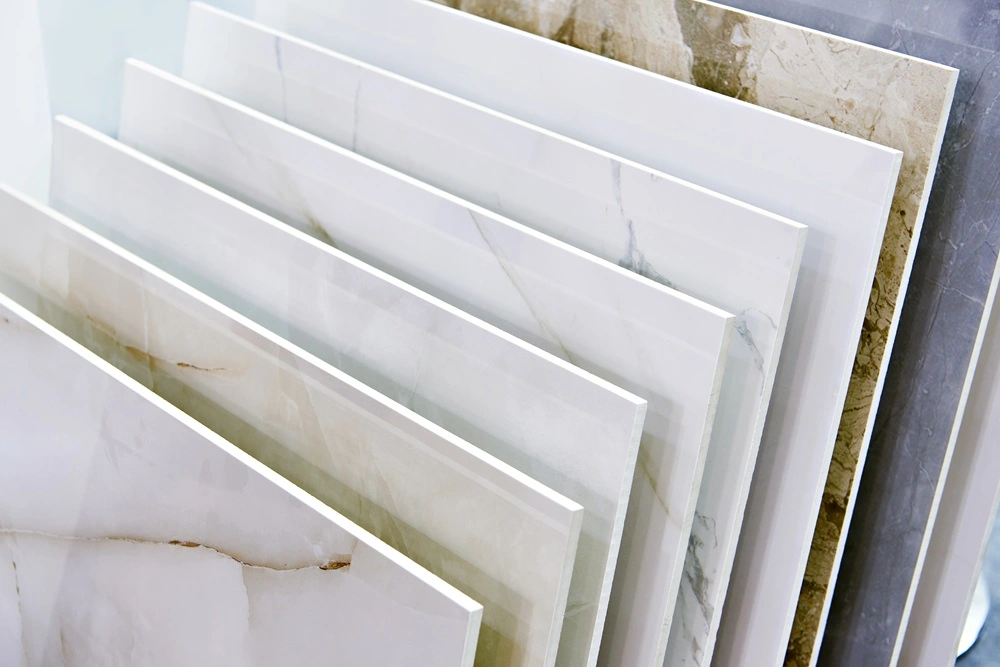
Porcelain pavers start with three raw materials - each one contributing a specific property to the finished product.
- Clay (kaolin): Forms the structural body of the paver. Refined kaolin clay is processed to remove organic matter and mineral impurities, creating a uniform composition that fires consistently across every tile in a production run.
- Feldspar: Acts as a flux that lowers the melting temperature during kiln firing. As feldspar melts, it fuses surrounding particles together in a process called vitrification - the same mechanism that gives porcelain its near-zero water absorption.
- Quartz (silica): Provides hardness and compressive strength. Quartz is the reason porcelain pavers resist scratching from patio furniture, grill carts, and heavy foot traffic without showing wear.
These materials are milled into fine powder, pressed under hydraulic force exceeding 5,000 PSI, and fired in industrial kilns at temperatures above 2,200°F. The result is a tile with water absorption rates below 0.5% - classified as "Impervious" under ASTM C373 testing standards.
For context, standard ceramic tile absorbs 3–7% water. Concrete pavers absorb 5% or more. That difference matters in Chicago, where a paver that absorbs moisture in November can crack apart by February.
According to industry data, the US hardscaping market continues to shift toward value-added materials like porcelain pavers - driven largely by homeowners who've grown tired of replacing cracked concrete and re-sealing natural stone every few years.
Important note: Not all tiles labeled "porcelain" meet the technical standards for true porcelain pavers. Always verify ASTM C373 classification as Impervious before specifying any product for outdoor applications. At our Wheeling showroom, every paver we carry includes verified test data.
Porcelain Pavers vs. Other Paving Materials
Choosing outdoor flooring means weighing porcelain against the materials it's replacing. Here's how each comparison shakes out in real-world conditions.

Porcelain vs. Concrete Pavers
Concrete pavers are the most common outdoor paving material, and they're significantly cheaper upfront - typically $2–$6 per square foot for materials alone. But concrete is porous. It absorbs water, stains from grills and planters, and requires sealing every 2–3 years to maintain appearance. In freeze-thaw climates, that absorbed moisture expands and contracts with each cycle, leading to surface spalling and cracking within 10–15 years.
Porcelain costs more initially but eliminates the sealing schedule entirely, resists staining without chemical treatments, and maintains its appearance for 50+ years. For homeowners who factor in lifetime cost rather than just the purchase price, porcelain typically wins.
Porcelain vs. Natural Stone Pavers
Natural stone - travertine, limestone, slate, bluestone - remains the gold standard for visual richness and organic character. No manufactured product perfectly replicates the depth of real stone, and we won't pretend otherwise.
The trade-off is maintenance. Natural stone is porous (even dense granite absorbs some moisture), requires periodic sealing, and can etch from acidic substances like citrus or wine. Limestone and travertine are particularly vulnerable to freeze-thaw damage along Chicago's North Shore, where winter temperatures regularly drop well below zero.
Porcelain pavers now mimic natural stone textures convincingly enough that the difference is difficult to detect at arm's length - and they do so without any of the porosity concerns. For pool decks, outdoor kitchens, and spaces exposed to food and drink, porcelain offers the stone aesthetic without the stone maintenance burden.
Porcelain vs. Brick Pavers
Brick and porcelain are both fired clay products, but that's where the similarity ends. Brick is fired at lower temperatures, resulting in higher porosity, a narrower color palette, and susceptibility to moss and efflorescence (that white mineral deposit that appears on aging brick surfaces).
Porcelain offers wider design range - including finishes that replicate brick's look - with superior color stability and zero efflorescence risk. Porcelain can also be cut more precisely than brick, enabling tighter joints and more intricate layout patterns.
Porcelain vs. Wood Decking
Wood decking delivers a warmth and natural grain that many homeowners love, particularly for raised decks and poolside areas. The problem is longevity. Pressure-treated lumber warps, splinters, and grays within 5–7 years. Composite decking performs better but still scratches, fades, and retains heat in direct sun.
Wood-look porcelain pavers capture the plank aesthetic - complete with grain texture and color variation - without any of the rot, splintering, or refinishing. They're installed on pedestal systems or sand beds rather than framed structures, and they handle standing water without concern.
Types of Porcelain Pavers by Style and Finish
Modern digital printing technology allows porcelain manufacturers to replicate virtually any natural material. The European manufacturers we import from - including Cersanit, Tubadzin, Paradyz, and Cerrad - produce some of the most realistic surface finishes available.
Stone-Look Porcelain Pavers
The most popular category for patios and pool decks. Available in finishes mimicking marble, travertine, slate, quartzite, and limestone. High-definition inkjet printing creates realistic veining and color variation across each tile, so the surface doesn't look repetitive across large installations.
Wood-Look Porcelain Pavers
Plank-format pavers (typically 8x48 or 12x48 inches) that replicate oak, teak, walnut, and reclaimed wood tones. Textured surfaces include grain patterns that feel authentic underfoot. These are ideal for terraces, garden paths, and covered porches where homeowners want warmth without wood's maintenance demands.
Concrete-Look Porcelain Pavers
Matte, industrial-finish pavers in gray, charcoal, and warm taupe tones. These deliver the minimalist, contemporary aesthetic that complements modern architecture - popular across North Shore communities like Winnetka and Glencoe where clean-lined home designs are common.
Large-Format Porcelain Pavers
Oversized pavers (24x24, 24x48, or even 32x32 inches) create expansive, seamless surfaces with minimal grout lines. Fewer joints means a more dramatic visual effect and less maintenance. Large-format installation requires precise base preparation - any substrate imperfection shows through on tiles this size. As an NTCA-certified installer with specialized Porcelain Gauged Panel certification, our team handles large-format work that many contractors avoid.
Porcelain Paver Thickness: 2cm vs. 3cm
Not all porcelain pavers are the same thickness, and choosing the wrong one for your application is one of the most common - and costly - mistakes homeowners make.
When to Use 2cm (¾-Inch) Pavers
The standard for most residential outdoor applications. 2cm pavers provide adequate breaking strength for patios, walkways, pool decks, and rooftop terraces when installed on a properly prepared base. They work with all three major installation methods (sand-set, mortar-set, and pedestal systems) and are significantly lighter than 3cm options, which matters for rooftop load calculations and ease of handling.
Most residential projects - including the majority of what we install across Highland Park, Lake Forest, and the surrounding North Shore communities - use 2cm pavers.
When to Use 3cm (1⅛-Inch) Pavers
The heavier-duty option for driveways, areas with vehicular traffic, and commercial applications with extreme load requirements. The additional 1cm of thickness increases breaking strength substantially, allowing these pavers to handle car and light truck traffic without risk of cracking.
3cm pavers cost more per square foot (both material and labor, given the added weight), and not every manufacturer produces their full design range in this thickness. If your project requires 3cm, confirm that your preferred finish is available before committing to a design direction.
Important note: Standard indoor porcelain tile uses 8–10mm thickness. Outdoor pavers must be 20mm (2cm) minimum. Using indoor-thickness tile outdoors is an installation failure waiting to happen - regardless of how strong the tile feels in your hand.
Indoor vs. Outdoor Porcelain Pavers
Porcelain pavers perform in both environments, but each application has specific requirements.
Indoor Applications
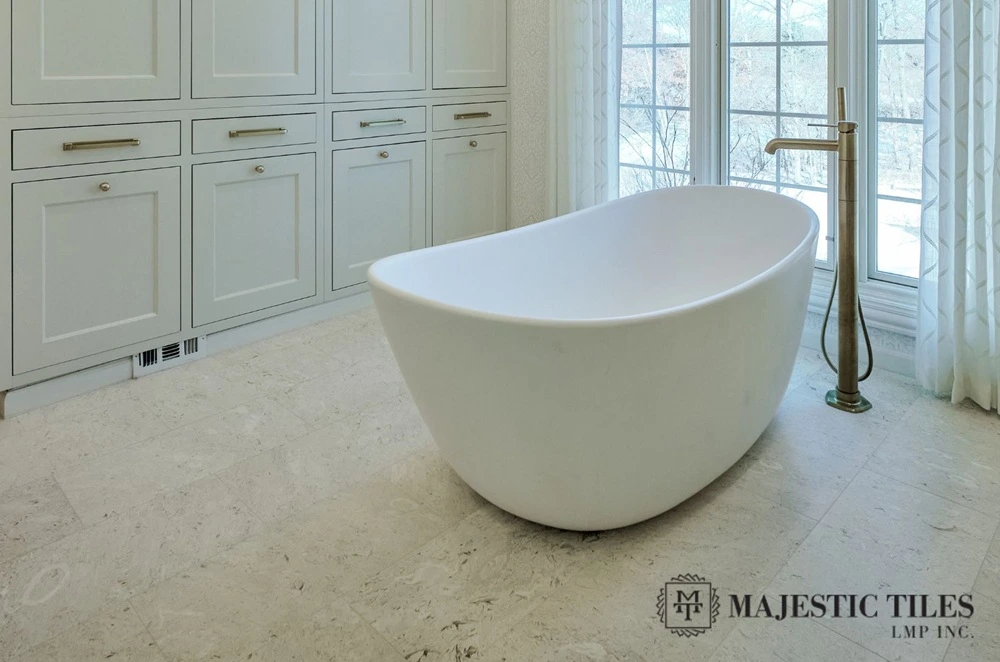
Interior spaces benefit from porcelain's stain resistance and effortless cleaning, making it ideal for kitchen remodeling projects, bathroom renovations, and high-traffic hallways and entryways. The non-porous surface prevents moisture damage in wet areas while offering a design range that natural stone can't match at the same price point.
Standard indoor porcelain uses 8–10mm thickness, which provides more than enough strength for residential foot traffic and furniture loads. The thinner profile also works better with radiant heating systems and standard door clearances.
Outdoor Applications
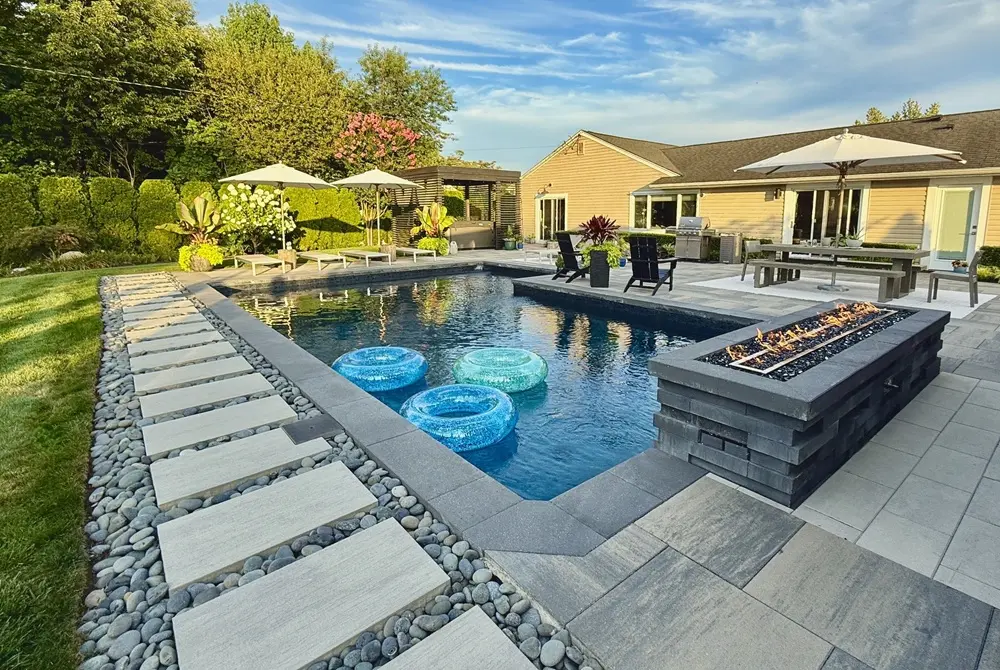
Outdoor flooring installation requires 2cm (20mm) minimum thickness - pavers specifically manufactured for exterior use. The increased thickness delivers breaking strength for patios, pool decks, walkways, driveways, and rooftop terraces.
Textured outdoor finishes provide slip resistance when wet, which is critical for safety around pools and in rainy conditions. Look for R11 or R12 slip-resistance ratings (the German DIN 51130 standard) or DCOF ≥ 0.42 (the American standard) for any surface that gets wet.
Creating Seamless Indoor-Outdoor Transitions
One of porcelain's strongest design advantages is the ability to run the same visual aesthetic from interior floors through patio doors to an outdoor living space. Many manufacturers - including the Polish brands we stock - produce matching indoor (10mm) and outdoor (20mm) versions of the same finish. The color, texture, and format are identical; only the thickness and surface grip differ.
This continuity trick is especially effective in open-plan homes where kitchen or living room floors are visible from the patio. Instead of an abrupt material change at the threshold, the eye reads one continuous surface.
Pros and Cons of Porcelain Pavers
No material is perfect for every situation. Here's an honest assessment of where porcelain pavers excel - and where they have genuine limitations.
Advantages
- Exceptional durability: Porcelain's dense composition delivers superior resistance to cracking, chipping, and surface wear compared to concrete, brick, and most natural stone. The material handles heavy patio furniture, grill traffic, and years of foot traffic without visible damage.
- Freeze-thaw immunity: Water absorption below 0.5% makes porcelain effectively frostproof. Concrete and natural stone absorb moisture that freezes, expands, and fractures the material over repeated winter cycles. Porcelain doesn't - which is why it's increasingly specified across Chicagoland projects.
- Zero-maintenance surface: No sealing. No chemical treatments. No annual recoating. The non-porous surface naturally resists stains, mold, mildew, and algae without ongoing product applications. Routine care is a broom and a garden hose.
- Design range: Digital printing technology produces realistic stone, wood, concrete, and marble finishes that are difficult to distinguish from the real thing at normal viewing distance. Large-format options (24x24 inches and larger) create modern, seamless surfaces with minimal grout lines.
- Lightweight construction: Porcelain pavers weigh significantly less than concrete or natural stone of equivalent size, simplifying transportation, handling, and installation - especially for rooftop terraces and upper-level balconies where structural load limits matter.
- Color stability: UV-resistant pigments fired into the tile body at 2,200°F+ won't fade, bleach, or shift tone with years of direct sunlight exposure. The patio you install this summer will look the same five summers from now.
Limitations
- Higher upfront cost: Material costs range from $3 to $35 per square foot depending on finish and manufacturer, typically exceeding concrete pavers. Professional installation adds $4 to $25 per square foot. For homeowners comparing initial price tags alone, concrete will always look cheaper - the value equation shifts when you factor in concrete's sealing costs and shorter lifespan.
- Professional installation required: Cutting porcelain demands wet saws with diamond blades and a steady hand. Improper cutting technique chips or cracks tiles that cost $5–$35 each. Base preparation tolerances are tighter than concrete pavers require. This is not a forgiving DIY material.
- Brittle when unsupported: Porcelain is extremely strong under compression but will crack if installed over voids, uneven substrates, or inadequately compacted bases. The tile itself rarely fails - poor installation underneath is almost always the cause when it does.
- Cold underfoot in winter: Like all tile and stone materials, porcelain conducts cold temperatures. For indoor applications, this can be addressed with radiant floor heating systems. Outdoor spaces simply require footwear in winter, same as any hard surface.
Important note: Most residential porcelain paver projects fall within the $1,000 to $8,500 total cost range, with installed costs averaging $7 to $60 per square foot depending on material selection and installation complexity.
Porcelain Pavers in Chicago's Climate
Chicago's weather is hard on outdoor surfaces. The cycle of hot, humid summers and sub-zero winters - with dozens of freeze-thaw transitions per season - destroys materials that perform perfectly in milder climates. Here's how porcelain handles it.
Freeze-Thaw Performance
This is porcelain's defining advantage in our market. Water absorption below 0.5% means there's virtually no moisture inside the paver body to freeze, expand, and fracture the material. Concrete pavers (5%+ absorption) and many natural stones develop surface spalling, cracking, and structural failure after years of Chicago winters. Properly manufactured porcelain pavers rated Impervious under ASTM C373 are effectively immune to freeze-thaw damage.
That said, the installation base matters just as much as the tile. Even frostproof pavers will shift, heave, or crack if the gravel substrate underneath isn't compacted properly or if drainage is inadequate. The paver survives winter - but only if the ground beneath it does, too.
UV and Heat Resistance
Chicago summers push surface temperatures above 150°F on dark-colored hardscaping. Porcelain pavers resist UV fading completely (colors are fired in, not applied as surface coatings), and their non-porous surface doesn't retain as much heat as concrete. Lighter-colored pavers stay noticeably cooler underfoot around pool decks - worth considering if barefoot comfort matters.
Slip Resistance Ratings Explained
For any surface that gets wet - pool surrounds, walkways, uncovered patios - slip resistance is a safety requirement, not an aesthetic preference.
- R10: Light texture. Suitable for indoor wet areas like bathrooms.
- R11: Medium texture. The standard recommendation for residential outdoor patios, walkways, and pool decks.
- R12: High texture. Specified for ramps, commercial kitchens, and areas with regular standing water.
Most residential outdoor projects should specify R11 minimum. The pavers in our showroom are labeled with their tested slip-resistance rating so you can match the right texture to your application.
How to Install Porcelain Pavers
Installation method has as much impact on long-term performance as the paver itself. The right approach depends on your substrate, drainage requirements, and how the space will be used.
Sand or Gravel Bed Installation (Dry-Lay)
The most common method for residential patios and walkways. A compacted gravel base (typically 6–8 inches of crushed stone) is topped with a 1-inch leveling layer of coarse sand or fine gravel. Pavers are set directly onto this bed with polymeric sand swept into the joints to lock everything in place.
Best for: Patios, garden paths, walkways with moderate foot traffic. Advantages: Allows slight seasonal ground movement without cracking. Good drainage through the joints. Most cost-effective installation method. Considerations: Requires thorough base compaction - any shortcuts here lead to settling and uneven surfaces within a year or two.
Mortar-Set on Concrete Slab
Porcelain tiles adhere directly to an existing or newly poured concrete slab using modified thin-set mortar. This creates an extremely stable, rigid surface.
Best for: Driveways, high-traffic areas, renovations over existing concrete surfaces. Advantages: Rock-solid stability. Ideal when converting an aging concrete patio into a porcelain surface without the cost of full tear-out and base reconstruction. Considerations: The concrete slab must be structurally sound - no major cracks, settling, or moisture issues. Proper drainage slope (¼ inch per foot minimum away from structures) must be established in the slab itself.
Pedestal System Installation
Adjustable-height pedestals support individual pavers above the underlying surface, creating an elevated deck with an air gap underneath. Each pedestal is independently adjustable, allowing perfectly level surfaces even on sloped substrates.
Best for: Rooftop terraces, balconies, areas requiring drainage access beneath the surface. Advantages: Superior drainage (water flows freely under the paver field). Easy access to waterproofing membranes and utilities below. Creates level surfaces on uneven or sloped substrates. Considerations: Higher material and labor costs. Requires perimeter edge treatment to close off the visible gap at the deck edges.
Why Professional Installation Matters
Porcelain is not a forgiving material for inexperienced installers. Cutting requires wet saws with continuous-rim diamond blades - using the wrong blade or forcing a cut chips the tile edge and ruins the piece. Base preparation tolerances are tighter than what concrete pavers demand. And proper drainage slope calculation is critical: standing water on any paved surface leads to problems, regardless of how waterproof the material is.
At Majestic Tiles, our NTCA-certified team handles every phase - base excavation and compaction, drainage grading, precise tile cutting, joint filling, and finishing details. We work with in-house crews (no subcontractors), which means the same people who plan your layout are the ones executing it. Professional installation typically runs $4 to $25 per square foot for labor, bringing total installed costs to $7 to $60 per square foot depending on project scope.
Important note: Even the highest-quality porcelain pavers will fail prematurely without proper base preparation and installation technique. The paver doesn't fail - the installation underneath does. This is where professional experience pays for itself.
How Much Do Porcelain Pavers Cost?
Cost varies significantly based on finish quality, paver thickness, installation method, and project size. Here's a realistic breakdown.
Typical project costs by application:
- Walkway (100 sq. ft.): $1,500–$3,000
- Patio (200 sq. ft.): $3,000–$5,000 with mid-range materials
- Large patio (400 sq. ft.): $5,000–$12,000 depending on material and pattern complexity
- Pool deck (300–500 sq. ft.): $4,500–$10,000
- Driveway (600+ sq. ft.): $10,000–$20,000+ (requires 3cm pavers and mortar-set installation)
The long-term value calculation matters here. Concrete pavers cost less upfront but require sealing every 2–3 years ($0.50–$2.00/sq. ft. per application) and typically need replacement after 15–25 years. Porcelain pavers need zero sealing and last 50+ years. Over a 30-year timeframe, porcelain's total ownership cost often comes in lower than concrete's.
How to Choose the Right Porcelain Pavers
Selecting the right product means matching technical specs to your application, then narrowing by design preference and budget.
Technical Specifications to Verify
Before comparing colors and finishes, confirm these performance requirements:
- Water absorption: 0.5% or less (ASTM C373 Impervious classification). Non-negotiable for any outdoor application in a freeze-thaw climate.
- Thickness: 2cm (20mm) minimum for outdoor residential use. 3cm for driveways and vehicular areas.
- Slip resistance: R11 minimum for outdoor surfaces (DIN 51130 standard) or DCOF ≥ 0.42 (ANSI A326.3 standard).
- PEI rating: 4 or 5 for high-traffic residential areas. PEI 3 is acceptable for light-traffic indoor spaces only.
- Breaking strength: Verify the manufacturer's published load data, particularly for pedestal installations and vehicular applications.
Matching Pavers to Your Project
Design selection starts with your home's architecture and the space's intended use. Large-format tiles (24x24 or larger) create modern, expansive-feeling surfaces - but they require flatter, more precisely prepared substrates. Smaller formats and plank shapes offer more pattern flexibility (herringbone, basketweave, running bond) and are more forgiving on slightly irregular bases.
Consider whether you want the surface to contrast with or complement your home's exterior materials. Stone-look pavers pair naturally with traditional architecture. Concrete-look finishes suit contemporary homes. Wood-look planks bridge the gap between modern and organic aesthetics.
Important note: Visit our showroom to evaluate samples under natural light and alongside your existing materials. Online photos don't capture texture, color depth, or how finishes interact with sunlight at different angles. Our Wheeling showroom stocks over 250,000 square feet of porcelain - including paver lines imported directly from Cersanit, Tubadzin, Paradyz, and Cerrad that you won't find at big-box retailers.
Selecting a Qualified Installer
The installer matters as much as the product. Look for contractors who hold NTCA (National Tile Contractors Association) certification - it means they've passed advanced testing on installation methods, material handling, and substrate preparation. Ask specifically about porcelain paver experience (it's different from indoor tile work) and request photos of completed outdoor projects in your area.
Verify that the contractor uses in-house crews rather than subcontracting labor. Subcontracted tile work is one of the most common sources of installation failures - the company you hired isn't the company doing the work.
Maintenance and Care for Porcelain Pavers
One of porcelain's strongest selling points for busy homeowners is genuinely minimal maintenance. Here's the full care routine.
- Weekly sweeping: Remove dirt, leaves, and debris with a broom or leaf blower. This takes minutes and prevents grit from scratching the surface under foot traffic.
- Monthly rinsing: Hose down outdoor surfaces to clear accumulated dust, pollen, and light staining. Water alone handles most cleaning needs - no special products required.
- Occasional deep cleaning: For stubborn spots, mix standard dish soap or all-purpose household cleaner with warm water. Scrub with a soft-bristle brush on textured surfaces, then rinse thoroughly. Porcelain is safe for pressure washing when needed.
- Immediate spill cleanup: Wipe up food, grease, or colored liquids promptly. Porcelain's non-porous surface resists staining, but prompt cleanup prevents any chance of temporary discoloration on textured finishes.
- Winter care: Use plastic or rubber-edged shovels - not metal - to avoid surface scratches when clearing snow. Porcelain resists salt and chemical de-icers that damage concrete and natural stone, so apply them without concern.
- Never seal porcelain: Sealers are unnecessary on non-porous surfaces and may actually create slippery conditions or uneven sheen. If a contractor recommends sealing your porcelain pavers, question their experience with the material.
The contrast with other outdoor materials is stark. Natural stone needs resealing every 1–3 years. Concrete pavers need sealing every 2–3 years. Wood decking needs staining or sealing annually. Porcelain needs a broom and a hose.
Frequently Asked Questions About Porcelain Pavers

How long do porcelain pavers last?
Properly manufactured and installed porcelain pavers last 50+ years with no structural degradation. The fired-in coloring doesn't fade, and the non-porous body doesn't absorb stains or moisture over time. The limiting factor is typically the installation base, not the paver itself.
Are porcelain pavers slippery when wet?
Not when specified correctly. Outdoor-rated porcelain pavers with R11 or R12 slip-resistance ratings provide reliable traction when wet. The textured surface creates grip without being uncomfortably rough for barefoot use around pools. Always confirm the slip-resistance rating before purchasing - not all porcelain finishes are suitable for wet areas.
Can porcelain pavers be installed over existing concrete?
Yes. Mortar-set installation over structurally sound existing concrete is one of the most common methods. The concrete must be free of major cracks and settling, with adequate drainage slope. This approach avoids the cost of demolishing and hauling away old concrete while dramatically improving the surface appearance and performance.
Do porcelain pavers crack in cold weather?
Porcelain pavers rated Impervious (under 0.5% water absorption) do not crack from freeze-thaw cycling. Cracking in porcelain installations almost always traces back to substrate failure - inadequate base compaction, poor drainage, or insufficient mortar coverage - rather than the paver material itself.
Are porcelain pavers more expensive than concrete?
Yes, upfront. Porcelain materials and installation cost roughly 2–3x what comparable concrete paver work costs initially. However, porcelain eliminates ongoing sealing expenses and lasts 2–3x longer than concrete, which often makes the total cost of ownership comparable or lower over a 20–30 year period.
Can you drive on porcelain pavers?
Yes, but only on 3cm (1⅛-inch) thick pavers specifically rated for vehicular traffic, installed via mortar-set method on a reinforced concrete slab. Standard 2cm pavers are not rated for vehicle weight and will crack under tire loads.
Do porcelain pavers need grout?
It depends on the installation method. Mortar-set installations use grout or caulk in the joints. Sand-set (dry-lay) installations use polymeric sand. Pedestal systems typically leave open joints for drainage. Your installer will specify the right jointing method based on your project.
What's the difference between porcelain pavers and porcelain tile?
Thickness and intended use. Indoor porcelain tile is typically 8–10mm thick and designed for interior floors and walls. Outdoor porcelain pavers are 20mm (2cm) or 30mm (3cm) thick, with higher breaking strength and textured slip-resistant surfaces rated for exterior conditions.
Transform Your Outdoor Spaces with Porcelain Pavers
Porcelain pavers deliver the rare combination of visual sophistication and genuine long-term durability that Chicago's climate demands. They resist freeze-thaw damage, UV fading, staining, and wear - without asking anything from you in return beyond a broom and a garden hose.
Majestic Tiles has served Chicagoland homeowners for over 20 years with expert remodeling services and direct access to premium European porcelain from manufacturers like Cersanit, Tubadzin, Paradyz, and Cerrad. Our NTCA-certified, in-house installation teams handle every project from base preparation through final inspection - no subcontractors, no handoffs.
Contact us to visit our 250,000+ square foot Wheeling showroom, evaluate paver options in person, and get honest guidance on whether porcelain is the right material for your project.
Let’s Build Your
Contact Majestic Tiles today to schedule a free consultation.
Get Your Personalized Quote.svg)
See How Porcelain Pavers Transform Your Spaces
Porcelain pavers deliver exceptional durability in Chicago's challenging climate, resisting freeze-thaw damage, UV fading, and staining that compromise other materials. Although they are more expensive than concrete pavers up-front, their long-term value, including eliminated sealing requirements and extended 50-plus-year lifespan, makes porcelain a savvy investment for homeowners planning spaces that perform beautifully year after year.
Majestic Tiles has served Chicagoland homeowners for over 20 years with expert remodeling services and exclusive access to premium porcelain tiles from leading European manufacturers. Contact us today to evaluate your space, discuss material options from our showroom, and receive honest guidance that helps you create living areas perfectly suited to Chicago's climate and your lifestyle.
.avif)
.avif)


